Queen- Sheer Heart Attack: Released in 1974 for EMI
Best Song: Now I'm Here
After the success of Queen II (Number 5 in the UK, though only 49 in the US) with "Seven Seas of Rhye" being a number 10 hit, Queen went on tour, with the UK leg of March followed by a US leg supporting Mott The Hoople from April through June of 1974. The tour was successful and they frequently got more cheers than Hoople.
However, the tour was cut short in May of 1974 after Brian May developed hepatitis AND a stomach ulcer. And yet despite all that the band went into AIR, Rockfield, Trident, and Wessex Studios to work on their third album, Queen III- nope just kidding it has the much more creative name Sheer Heart Attack. The album, released in November, would be a smash hit and rocket Queen to superstardom.
The album would be so successful thanks to being more accessible than the previous ones, the hard prog roots giving way to a poppier sound. Queen's genre diversity is in full swing here, there's hard rock ("Brighton Rock", "Now I'm Here", "Flick Of The Wrist", "Tenement Funster") Balladry ("Lily Of the Valley", "Dear Friends", "In The Lap of the Gods... Revisited", "She Makes Me") Quite possibly the first thrash metal song ("Stone Cold Crazy") jaunty music-hall stuff ("Killer Queen", "Bring Back That Leroy Brown") Soul ("Misfire") and a prog song ("In The Lap Of The Gods"). Unfortunately, with this diversity comes the fact the album is much patchier than previous efforts, there's several moments of bad stuff on here. The band's playing is still strong, as are Mercury's vocals, but there's quite a few of lame filler songs. Thankfully there's still lots of good stuff to be found.
The album starts off with a mixed bag in the live staple "Brighton Rock", penned by Brian May. On the plus side, the song is driven by a GREAT chugging guitar riff, with the band plowing along at 100 miles an hour to create a killer hard rock experience, and the harmonies in the chorus are classic Queen, and there's also a top-notch instrumental break/guitar solo with Brian shredding it up and Roger Taylor rocking it on the drums. On the minus side, the carnival intro is completely out of place, Freddie Mercury delivers a genuninely BAD vocal performance, as he sings in a ridiculous girly falsetto, and the instrumental break quicky gives way to a pointless "show-off" solo that lasts way too long. Still, I like the song more than not.
Next up we have the mega-hit "Killer Queen", penned by Freddie, which is an awful lot of fun despite the fact the lyrics are apparently about prostitutes. The piano driven melody is jaunty and fun, the harmonies are stellar, especially in the chorus with tons of layering, Freddie's playful vocal performance is delightful, especially his juggling of full voice and falsetto effortlessly, the guitar solo is top-notch, and the little touches (The phasing effect on "Dynamite with a laser beam") add a lot of depth to the layered sound. Overall, a nice fun music-hall number deserving of it's hit status.
The next three tracks are combined in a medley, a throwback to their progressive roots. The first one, "Tenement Funster" is Roger Taylor's vocal showcase on the album, and it's a typical Roger Taylor song, a great rebellious rocker. It starts with a strong repeating arpeggio riff on acoustic guitar before it gives way to a simple two-note repeating passage, before the song picks up, as Taylor goes into his raspy higher register (which fits well with this song). We also get another superb guitar solo from Brian May. Overall a strong rock song, who's ending segues into...
Freddie's angry "Flick of the Wrist", an attack on their manager, Norman Sheffield. It starts with a complex classical-inspired piano part before going into an angry, scathing rocker. The riff, played on guitar and piano to great effect, is menacing as can be and sounds awesome, Freddie sings the pissed-off lyrics (It's not every day you find a song that starts with the line "dislocate your spine") with venom, and we get some classic Queen harmonies in the disarmingly happy chorus, we also get yet another awesome solo. Afterwards, things calm down significantly, as we segue into...
Freddie's ballad "Lily Of The Valley", which while very short (1 and a half minutes) is nonetheless strong, it's a pretty ballad with lovely piano, great use of falsetto from Freddie, and more beautiful harmonies from the band. A song which perfectly defines the phrase "Short and sweet".
The second big hit of the album, their most played live song, and my pick for the BEST song on the album comes up next, in Brian's headbanging "Now I'm Here". It starts with a quiet chugging riff in the background with Freddie doing delay effects with his voice, and then we burst into high-pitched, screaming guitar parts that lead into a top-notch hard rocker. The main guitar lines are absolutely top-notch, Freddie delivers a strong agressive vocal, Queen's harmonies are top-notch as always, and the instrumental break is great, with nice soloing from Brian backed by some good piano parts. Definitely deserving of being such a hit.
Next up is a throwback to the band's prog roots, in Freddie's complex "In The Lap Of The Gods". It starts off with a bang with Roger Taylor using his really high falsetto to great effect, leading into an eerie intro with some creepy harmonies and guitar, which fades out after 40 seconds only to come back in. After a minute of chaos, we fade into a gentle piano ballad, which is sadly marred by a stupid-sounding pitch-shifting of Freddie's voice. Freddie then starts using his natural falsetto, and the song picks up with strong drumming from Roger Taylor, and the band repeating "leave it in the lap of the gods" over and over, with Roger Taylor doing some insanely high pitched falsetto, and a great guitar solo as well. Described as a test-run for "Bohemian Rhapsody", it can definitely be heard in this great track.
Next up is the third big hit of the album, one of Queen's heaviest, and possibly the first thrash metal song, the group-composed "Stone Cold Crazy". The song plows along, with a excellent chugging riff leading the way, with some wild soloing, and it's an overall great tune, but very simple.
Another 1-minute song follows, "Dear Friends", sung by Brian. Even though it's very short, it's still a lovely piano ballad with nice singing from Brian May. It's an incredibly simple song, but it's a nice reprive from the heaviness of "Stone Cold Crazy".
Unfortunately the album takes a turn for the worse in the next three tracks. John Deacon's first piece, "Misfire" has nice vocals, but the main melody is pretty mediocre, cheesy, and doesn't really grab me in any way.
Freddie's "Bring Back That Leroy Brown" is bland, saccharine, cheesy show-tune fluff, that lacks and substance to grab onto and wouldn't sound out of place in a episode of My Little Pony: Friendship Is Magic (That's not a compliment).
And the last in this three song stretch is the Brian penned and sung "She Makes Me" MY GOD is this song boring and dragging, just repeating the same three notes over and over again for four minutes until at the end the song breaks down into noises. Many hail this as one of Queen's worst songs, and it's not hard to see why.
Thankfully, the album ends on a high note with Freddie's ballad "In The Lap Of The Gods... Revisited". It has nothing to do with the first one, but is a top notch track. The verse piano parts are quite pretty, and the verses also feature more lovely Freddie falsetto, and the chorus has a great amount of anthemic power which made it a popular live closer. The harmonies are also strong, with some nice counterpoint at times. A great improvement.
Overall, while the good stuff is good (But not up to the highs of the previous albums) the three track stretch near the end drags it down, and some of the good songs have flaws, so I can only give it a 3/5. Get it for the goods.
Pink Floyd- More: Released in 1969 for Columbia Records
Best Song: Cirrus Minor for atmosphere, The Nile Song for rocking out, and Green Is The Color for beauty
A Saucerful of Secrets was a big sucess, charting number 9 (Made no impact in the US, though) and after a tour they were asked by film director Barbaret Schroder to compose the soundtrack for his film, More. So they went into Pye Studios in February of 1969 to record the soundtrack, released in June of 1969.
The album is entirely sung by David Gilmour, and he shows the full range of his vocals on the album, going from soft falsetto to gritty belting with ease. Roger Water's star is shining, as he writes all the songs except Nick Mason's "Up The Khyber" and Gilmour's "A Spanish Piece" (Though all the other instrumentals are group composed) However, quality wise, this is another patchy early album. Good stuff abounds, but it's bogged down by filler and avant-garde crap.
The first song on the album is the best. "Cirrus Minor" starts off with ONE MINUTE of birds chirping (No joke!) but when the song starts it's GREAT, featuring a incredibly haunting acoustic guitar theme coupled with eerie singing and spooky organs in the background, and creates an awesome atmospheric piece which is also quite simple, before giving way to an EPIC, majestic slow chording from Richard Wright that gives me chills, coupled with creepy atmospheric sounds. Yep, this is one great start to the album.
"The Nile Song" is just as good, however. The most interesting thing about the song is that it is almost grunge, released over 20 years before Kurt and Co. launched it onto the world. But not only is it innovative and ahead of it's time, it's awesome. The main, ultra-distorted riff is crushing, Mason's drums are powerful, and Gilmour's near-screamed vocals show he could sing metal surprisingly well, also cool is how the main verse melody changes keys SIX times! We also get a ripping guitar solo as well. So far, so good.
Unfortunately, the following "Crying Song" is not good at ALL. MY GOODNESS, is it one sleeeeeeeeeeepy song. The song is SO quiet, you might not even notice it's playing if you're listening in the background, and the melody is just bland acoustic strumming. It works as a cure for insomnia but nothing more. "Up The Khyber" is better though, a neat little jazz piece with frantic drumming from Mason mixed in with some neat piano parts from Wright and some wild organ noodling. I can't say much more than that, it's a pretty simple song, and short, at only 2 minutes.
The third pick for "best song" on the album comes after that. "Green Is The Colo (u)r" is another acoustic ballad, but it's BEAUTIFUL. The acoustic melody, coupled with the flutes in the background, is positively gorgeous, and Gilmour's falsetto singing and Rick's piano solo adds to it perfectly to create a incredibly lovely atmosphere. A terrific song, one of their prettiest.
"Cymbaline" is also good, creating a wonderfully creepy atmosphere from it's sparse arrangement of just piano and faint drumming, and it also boasts great singing from Gilmour. The slow organ themes are great too (In terms of slow atmospheric sequences i stand by that NO ONE was better than Rick Wright). However, the end of side one, "Party Sequence" is completely dispensable, nothing more than drumming.
The second side is all group-composed instrumentals (sans one) and they very in quality. "Main Theme" is very good. A panning gong intro gives way to MORE spooky atmospheric playing by Rick (My favorite keyboardist, honestly), a neat booming drum track from Nick, with panning gongs in the background, and a great slide guitar solo to close things off. I also want to point out the wah-wah effects on the organ are REALLY cool.
Up next is "Ibiza Bar", another proto-grunge song similar to the "Nile Song" and it's pretty close to the standard. The main guitar riff and singing aren't as strong as "Nile Song" but still awesome, and the organ parts are neat too. The guitar solo is also a ripping one.
Unfortunately, the album falls off with the last four tracks. "More Blues" has pretty much no melody to speak of, it's just guitar noodling (I guess some of the noodling's good, but...) "Quicksilver" is another awful avant-garde song, with no rhyme, reason, or cohesion, just noises and atonal organ parts, and of course it lasts SEVEN minutes, easily the longest track on the album, and to make matters worse while "Interstellar Overdrive" and "A Saucerful of Secrets" had good bits, this doesn't. Easily one of Floyd's bottom 10.
"A Spanish Piece" is the VERY DEFINITION of filler, just about half a minute of flamenco guitar while Gilmour whispers Spanish phrases. Thankfully, "Dramatic Theme" ends the album on a high note, a neat funky jam with cool wah-wah soloing from Gilmour.
You may notice this review's very short compared to others, but that's simply because lots of songs are simple, short instrumentals. Overall, while it could be a good album, the presence of five tracks I don't really like really weighs it down, so I can't give it any more than a 3/5. Get it for the good stuff.
You might notice that my reviews only come out once or twice a month. You might wonder, why is that?
It's simply because of two reasons:
1. School gets in the way, I often have very little free time to work on my reviews
and 2. Album reviews take time, they're pretty long.
So I hope you understand.
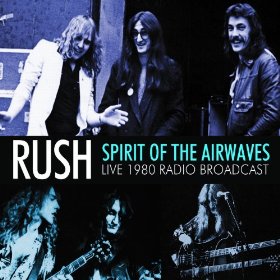
Rush- Spirit of The Airwaves: Released in 2014 (But recorded in 1980) for Smokin' Records
Best Song- 2112
A major step down from previous live albums, this live album was recorded on February 14, 1980 in St Louis, on the Permanent Waves Tour. This show was broadcast live on the radio. It was heavily bootlegged for many years before being released officially in 2014.
There are singificant problems with the album. The first problem is that like many Rush live albums, the show is incomplete, and several of the songs ommited would've been highlights. Cut from the release are "Freewill", "A Passage to Bangkok", "The Trees", an abridged "Cygnus X-1" (Cutting out all of Part II as well as a verse of Part III) an abridged "Hemispheres" (Cutting out "Apollo" and "Dionysus"), "Closer To The Heart", and "Jacob's Ladder". The second problem is that Geddy's voice sounds AWFUL. While his voice was fine on the album, live, even on the new stuff, he sounds terrible. Throughout the whole concert, he sounds weak, airy, and powerless. A couple good performances, but that's it.
Otherwise, however, it's a good one. The set is a varied one, with a great mix of old and new, as well as some surprises. Rush is represented by excerpts of "Working Man", "Finding My Way" and "In The Mood", Fly By Night by excerpts of "Anthem", "By-Tor And The Snow Dog", and "Beneath, Between, and Behind", Caress of Steel by a bit of "Bastille Day", 2112 by some of the title track, A Farewell to Kings by "Xanadu", Hemispheres by "La Villa Strangiato", and Permanent Waves by "The Spirit of Radio" and "Natural Science". And the band plays the songs with power and fire, making up for Geddy's vocal deficiencies. Finally, there's no overdubs!
The concert starts with an abridged version of "2112", cutting out "Discovery", "Oracle: The Dream" and a verse of "Presentation". And it's a great, great performance. "Overture" gets an AMAZING intro, where the whooshing synth noises are joined by Neil bashing the drums and eerie, tense synth lines, building the tension to incredible levels, and working fabulously as an opener. And the rest of the intro is great too, with the band playing with fire, force, and speed, and Alex's guitar tone is much better than the studio. The added synths are good too. "Temples of Syrinx" features terrible, strained singing, but the band plays powerfully, especially Neil. The excerpt of "Presentation", with one verse leading into the solo, has more awful vocals, with Geddy struggling to hit notes that he could hit with ease and power, but the performance is strong, and Alex blazes through the solo. "Soliloquy" isn't really too special, no stronger than the studio, and with weaker vocals, and finally, "Grand Finale", is a great end, with WILD guitar soloing and powerful bass. Overall, a strong performance.
Next up is, as usual, the abridged "By-Tor And The Snow Dog" with the instrumental jam segueing into "Xanadu". "By-Tor" has further weak vocals, but the instrumentals are strong, and heavy on the bass playing. And as always, the instrumental jam section is awesome, with funky bass grooves from Geddy, wild guitar soloing, and Neil playing a strong beat under it all. As for "Xanadu", the intro is marvelous, atmospheric guitar and synths aplenty (I cannot stress how much I love this intro to the song). Close to 3 minutes this time, but it doesn't feel overlong at all. As for the main song, it's a pretty standard performance, all things considered, but it does have a surprisingly strong performance from Geddy, belting out the vocals with power.
"The Spirit of Radio" is up next. Honestly, it's a VERY bland, routine peformance, sounding exactly like the album version with pretty much no boosts in anything, except a strong solo, and good added synth lines at the end. "Natural Science" is much better, though. Remember in my Permanent Waves review how I said "Natural Science" was better live? Well, this proves it! The acoustic intro is good as ever, but the "Hyperspace" section really shines, with Alex playing with much more fire and power than the studio, and Neil's drumming is stellar throughout, though Geddy's singing is still very weak. Once again, the synths add extra texture. And "Permanent Waves" is much better too, the synths are much less intrusive on the guitar parts, and it's played faster.
After this comes the BIG surprise of the show, a live performance of "Beneath, Between, and Behind" (!) which hadn't been played live since 1975! It's lacking the second verse, but it otherwise sounds strong, boasting a stronger groove than the studio performance, though Geddy's voice is AWFUL, weak, airy, and straining to hit the notes. We close out the main set with a "Working Man"/"Finding My Way"/"Anthem"/"Bastille Day"/"In The Mood" oldies medley. Overall, it's nice to see how their early albums still get a fixture, and the performances themselves are strong. "Working Man" starts with a goofy reggae intro, before going into the regular song, and while Geddy's singing is still horribly weak, the band plays great, with Alex doing more wild shredding over Geddy's bass and Neil's drums in the jam. This jam segues into the opening riff of "Finding My Way", but after only 20 seconds, that leads into "Anthem". I would really like to hear more, though. Anywho, "Anthem" is cut to the first verse and chorus, leading into the solo and ending, and it's not really anything special. The end leads into "Bastille Day", also cut to a verse, chorus, and solo. The more promient drums add a strong punch, and Geddy surprisingly sings it well, singing the high vocal lines with power. "In The Mood" closes out the medley, as per usual. Alex shreds through the solo, and the rest is fine. Overall, a strong medley. Of course, we end with an obligatory 5 minute drum solo, and it sucks, but whatever.
The show closes out with an encore of "La Villa Strangiato". The song starts with a AWESOME shredding intro on electric guitar, with Alex doing some stunning riffs, before going into the usual "To Sleep, Perchance To Dream" section. Added synth lines add extra tension to this portion of the song. And the rest is performed top-notch, with the whole band playing on all cylinders, and all sorts of killer jamming. A top-notch finale to a great show.
Overall, weaker than other albums, but still essential. 4/5.
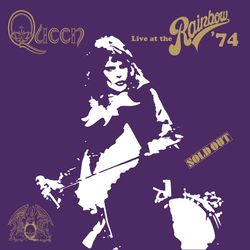
Queen- Live At The Rainbow, March 1974: Released in 2014 (But recorded in 1974) for Virgin EMI Records
Best Song- Liar
In case you didn't know, Queen were a FANTASTIC live band, one of the best in the business. Between their improvisation skills, incredible energy, and Freddie Mercury's stage charisma, Queen were among the best. And this concert proves, even at this early stage, that they were great. This concert was recorded at London's Rainbow Theatre on March 31, 1974, on the final gig of the UK leg of the Queen II Tour, their first as a headlining act. It was supposed to be released back in 1974, as their third album, but was shelved. It circulated as a bootleg for many years, before finally seeing release in 2014 along with the November show at the same venue.
And it's a great one! The setlist consists of 12 songs, 5 of which are from Queen I ("Son And Daughter", "Great King Rat", "Keep Yourself Alive", "Modern Times Rock N Roll", and "Liar") and 5 of which are from Queen II ("Father To Son", "Ogre Battle", "White Queen (As It Began)", "The Fairy-Feller's Master Stroke", and "Seven Seas of Rhye") with the other two being a cover medley ("Jailhouse Rock/Stupid Cupid/Be Bop A Lula") and the non album single "See What A Fool I've Been". A crap-free setlist, though given their only bad song at this point was "Jesus", it isn't really hard.
As for the performances themselves, they're top notch! The band is on fire, playing all the songs with incredible power, energy, and intensity. Equally top-notch is Freddie's singing, as he showcases power and force that was only HINTED at on the studio takes. As a result, we're in for a fantastic album. Well, MOSTLY, there is one problem, and that is the problem of AUTOTUNE! Yes, Freddie Mercury, my favorite singer of all time, gets the T-Pain treatment. Also, the show is incomplete, as their covers of Shirley Bassey's "Big Spender" and Little Richard's "Bama Lama Bama Lou" are cut out. Otherwise, though, this is a great live album!
The album starts with a tape of "Procession" (Which works well as a tape opener) before going into the first song, "Father To Son". The opening riffage explodes out of the gate, Brian's guitar tone is much more powerful then the studio. Most of the song is a standard performance, not much better then the studio, but the heavy part is FAR better then the studio, thanks to Brian's much rawer guitar, Roger's more powerful drumming, and Freddie's powerful vocals, and the outro also boasts more power. The fade-out outro is cut, but oh well. "Ogre Battle" follows. The song is introduced with a cool, eerie feedback intro, replacing the backwards part on the studio cut, and it does a great job of building tension. The main song is much better then the studio, the guitar and drums are much louder then on the more subdued studio version. We also get some humor, midway through the band STOPS the song and Freddie asks "How do you like the show so far?" before returning to the song without skipping a beat, which also shows the band's great instrumental skills.
Next on the agenda is "Son And Daughter" which is extended from 5 all the way up to 9 minutes. It MASSIVELY exceeds the studio version. The guitar parts are even heavier and more crushing then the studio, and Freddie's vocals get a boost to match, adding the right amount of rasp to his vocals in the right places. But the extension comes after that, as we first go into a great jam section, with Brian providing great guitar parts and Roger drumming wonderfully, then we go into a guitar solo, with Brian by himself. Now, i'm not the biggest fan of extended "show-off" soloing, but this one is better then most, it follows a clear melody, and isn't too long, some parts even have the riff to "Working Man"! After around 2 minutes, we return to a reprise of the main song, which ends with a KILLER slow part. A fantastic performance, one of the best.
"White Queen" (As It Began) follows. The crying guitar intro from the original is cut off (No!) but the rest is great. Freddie delivers a great performance, the heavier riffs are MUCH more heavy and powerful then the studio, and the verse sections are performed fine (not any better, though). The instrumental break is also powerful. "Great King Rat" is next, and it ROCKS. The opening shredding section is played with much more intensity then the studio, and in the verse sections, the acoustic strumming of the beginning is now a powerful electric, adding much more energy. Freddie's singing is great as ever. The guitar soloing is blazing and powerful, and all sections of this multi-part epic are powerful, intense, and excellent. Next up, comes a holy grail of Queen recordings: A LIVE performance of "The Fairy Feller's Master Stroke". To date, this is the ONLY live recording of the song (It was played frequently on the tour, as well as once on the Sheer Heart Attack Tour, but no recordings exist). It has no harpsichord (BOO!), guitar and piano fill it's place, and while it loses some charm, it gains power in it's place. Unfortunately, the autotune is REALLY apparent here, listen especially to when he sings "soldier, sailor, tinker, tailor, plow-boy". Still a good performance, though nothing special.
"Keep Yourself Alive" is up next. Freddie's singing is more powerful then the studio, but other than that, it's just a standard performance of the song (Which means it's great), except Roger's drum solo is lengthened. It keeps a solid groove, so there's that. Next up is "Seven Seas of Rhye", which exceeds the studio performance, due to more emphasis on the guitar, plus Freddie's powerful voice, and the great harmonies. I also love the pause between "And with a smile... I'll take you to the seven seas of rhye" It ends with a great guitar outro, replacing the "I Do Like to be Beside the Seaside" bit. Afterwards we get another MAJOR highlight of the album, the rendition of "Modern Times Rock 'N' Roll". It MASSIVELY exceeds the studio, the guitars are WAY more heavy and metallic, Freddie sings instead of Roger, giving a top-notch performance, and it's all performed at a faster tempo, giving us a truly magical speed metal experience.
Finally, we close out with a great ending triplet. The band first starts off with the cover of Elvis' "Jailhouse Rock", with excerpts of other songs ("Stupid Cupid" by Neil Sedaka, and "Be-Bop-A-Lula" by Gene Vincent and the Blue Caps). It's a burst of raucous energy, Freddie gives a great rock-n-roll vocal, and it's all great fun. Then, after two minutes, the band gets into improv mode, with Brian giving some fantastic guitar soloing, and Freddie letting the audience have some fun. Overall, a great performance of this '50s classic. But the BIG highlight of the album is up next, in a FANTASTIC performance of "Liar". Roger's opening drum-beat boasts way more power than the studio, as do Brian's guitars, especially the killer riffage 1 minute in. Into the main verse section, the harmonies are top-notch and dense, Freddie delivers a great, rawer vocal, and the guitars are great. The chugging riffage after the "Please, will you direct me, in the right way" line is extended, which sounds good. The jam is extended, with Brian pulling off absolutely WILD guitar soloing, some of the best he'd ever do, and the breakdown is also extended, with the tension escelating even more thanks to some guitar "bursts" and Roger drumming like a mad-man. The heavy riffs afterwards are also MUCH more powerful. A fantastic performance, the highlight of the show.
We finally close out with a rendition of the B-Side "See What A Fool I've Been", where Queen does a song in the style of Led Zeppelin. It's VERY reminiscent of "You Shook Me", but that was good, so why not this? The bluesy riffs are great, Roger's drumming is strong, and Brian does some great soloing in the middle. Freddie also sounds good. A great end to the show.
Overall, a solid live album. The autotune drags things down, and some performances aren't too special, but it's a great one, you should get it. 4/5.
Pink Floyd- A Saucerful Of Secrets: Released in 1968 for Columbia Records
Best Song- Let There Be More Light
A major change, and not for the better, though also not for the worse. The Piper At The Gates Of Dawn was a major success for the band. It charted number 6 in the UK (though only 131 in the US), and "Astronomy Domine" and "Interstellar Overdrive" would become popular numbers. The band would appear on lots of TV and radio shows, which would help drum up publicity significantly.
Unfortunately, there was a major problem. Frontman Syd Barrett's mental state was quickly deteriorating. The stress of touring, drug addiction, and other problems led to him going off the deep end. Live, he would frequently stop playing the guitar, and start detuning it instead! He would also never speak when asked questions in interviews, and his songs were starting to get more... out there (One of them, "Have You Got It Yet" was a cruel joke on the band members). As the tour continued, his illness got worse. The band members soon decided to hold auditions for a new guitarist, who would cover for Barrett live. They found one in David Gilmour, formerly of the band Joker's Wild. The arrangement would have been that he'd perform live, with Barrett in the studio, but it soon turned out to be unworkable. Barrett was released from the band in January 1968, with David Gilmour becoming the new guitarist, bassist Roger Waters becoming the lead songwriter, and keyboardist Richard Wright becoming the new singer, and they headed into EMI Studios to record A Saucerful Of Secrets, their second album.
The album would start a new, and unfortunately, not very good era for the band, the "Lost Period". Over the next few albums, the band would hop from genre to genre, and try many things, with the results a mix between top-notch, good, bad, and downright unlistenable. This album is decent, and a step up from Piper, but it's still not very good. Gilmour's guitar style is very good, and later on in the band's career would become spectacular, and Richard Wright has a solid singing voice, a pleasant, smooth baritone. The album is a patchwork of material, with 3 songs recorded while Barrett was still in the band, and the other 4 recorded with Gilmour. The album is a mix of styles, going from spacey rockers ("Let There Be More Light", "Set The Controls For The Heart Of The Sun") to soft pop ("Remember a Day", "See-Saw"), to avant-garde ("A Saucerful Of Secrets") to just plain bizzare ("Corporal Clegg", "Jugband Blues") and while the first three tracks are all excellent, the rest range from ok to awful.
The first track, "Let There Be More Light", is a spacey rocker composed by Waters, with Wright doing lead vocals (With Gilmour in the choruses) and it's the clear highlight of the album. The song starts off with an AWESOME funk bass riff, Wright's organs then join in, playing more incredible spacey riffs, as well as Mason with his drums, and they go into a cool, spacey jam session with Wright's noodling on his organ, Mason contributing some occasional drum strikes, and Waters continuing the bass riff underneath. After a minute and a half, a cymbal roll from Mason brings us into the main song, and it's equally excellent, led by a menacing guitar/organ riff and equally menacing Wright vocals (With Waters whispering in the background) that create a great, ominous atmosphere, with a chorus that consists of very cool, reverb-heavy drumming, and great guitar lines backing Gilmour's vocals. Each of these parts are very short, and repeat a ton. There's also a GREAT instrumental outro! Gilmour plays some excellent trippy guitar parts, Mason's drumming with force and power, Wright's going wild on his organ, and the whole thing is drenched in echo to create an excellent psychedelic experience. Overall, a fantastic start.
None of the other songs are quite as good, however. But that doesn't mean all are bad! "Remember a Day" comes next, a Wright-composed and sung ballad recorded at the end of the Piper sessions. It's a great, gentle ballad, completely atypical of any other Pink Floyd songs. We start with some neat, trippy guitar noise, followed by a gentle piano solo. The main song is top-notch: the piano/drum groove is neat, we get some wacky guitar parts, and great singing from Rick. More piano solos are in between verses, they're quite pretty, part-classical solos that add to the song well. The song slows in tempo, with some cool beeping noises in the background, before going into an instrumental break, led by Mason's powerful drums, trippy guitar by Syd (This was before the rest of the songs) and all sorts of cool sound effects and whispering, then it's back into the main song, before another spacey instrumental break closes things out. A great one overall.
The most famous song on the album comes next, the ultra trippy, Waters penned rocker of "Set The Controls For The Heart of the Sun", and it's a excellent one. The song starts with a trippy, repeating bass riff, before Mason's powerful, loud drumming enter, weird electric piano and organ, and all sorts of cool sound effects, backing Water's menacing, whispered vocals which further add to the mood. Then there's the AMAZING electric piano/organ solo in the middle of the song, a PERFECT representation of space. The song could be said to be overlong (It's 5 and a half minutes and there's little build or variation) but does it really matter when the basic theme is so good?
So the opening trio makes it look like it's set to be a top-notch album, does it not? However, the rest is much, much weaker. Water's psychedelic riff-rocker "Corporal Clegg", the first of his many, many anti-war songs follows, and I like about half of it. The half I like: The main riff is menacing as hell, the vocal alternation between Gilmour, Wright, and NICK MASON (The ONLY singing part he'd EVER get) is top-notch, with tons of weird effects put on their voices, Nick's drumming is loud and forceful, and there's lots of trippy keyboards backing. The chorus also has some cool wah-wah guitar lines. The half i don't like: There are two kazoo solos, and while they're funny, they're also pretty ridiculous and stupid. And the final minute and a half of the piece is just awful. Over the second of the kazoo solos, the piece dissolves into cacophony, with tons of screaming, sound effects, and noises that have no coherency, rhyme, or reason. So that's 2 minutes of good music and 2 minutes of bad, averages out to be, well, average.
It's still a masterpiece compared to the next track, "A Saucerful of Secrets", a 12 minute, 4 part song credited to all four band members. There is NO melody, coherency, rhyme, reason, or ANYTHING in the first 9 minutes of the song, it's just meaningless, directionless NOISE. I won't bother going into details. However, the last 3 minutes are INCREDIBLE! Richard Wright starts playing an eerie, EPIC, ULTRA-atmospheric slow organ chording, before the SPINE-CHILLING harmonies enter, combining to create a BREATHTAKING finale to such an awful song. Overall, a TERRIBLE song, and if not for the finale would be a strong contender for their worst.
Up next is another Wright-penned and sung ballad, "See Saw". And it's the ONE start-to finish good song out of the last 4. A pleasant ballad, starting with some nice acoustic guitar parts, before going into a lush, orchestrated section, a crashing sound, and then we go it all again. Wright's singing is great, and the orchestrated melody is beautiful, nice piano lines are also featured, and some good guitar as well. While it's quite simple, it's still good, and a relief from the last song.
Unfortunately, the album ends on a terrible note. "Jugband Blues" is Syd's last composition for the band. Lots of people praise the song as being a tear-jerking look at his mental illness. That may be true, but that doesn't change the fact that the actual music is just awful. The opening acoustic melody is just bland acoustic strumming, with nothing engaging about it. The "I don't care if the sun don't shine" section has a good melody, but then it gets drowned out by a COMPLETELY NONSENSICAL, well, "jugband" playing a nonsensical, ridiculous melody, and then turns from THAT into a cacophony of noise. However, the end part is a gentle acoustic melody, and the closing lyrics of "And what exactly is a dream/and what exactly is a joke" are incredibly haunting in context. Still, a few nice bits can't salvage that song.
Overall, a very patchy album. Some bad, and some good, creating something overall decent. 3/5.
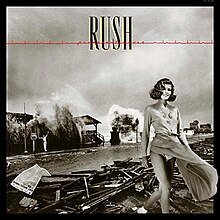
Rush- Permanent Waves: Released in 1980 for Mercury Records
Best Song- Natural Science
Rush's Hemispheres album wasn't exactly a raging success. With progressive rock's decline in popularity, (Thanks, ELP) it only charted number 47, though "The Trees" would become quite popular. After going on the long and grueling Tour Of The Hemispheres, spanning eight months and 132 gigs, from October 1978 through June 1979, Rush went into Le Studio (Quite a creative name) in Quebec in September to record their seventh album, Permanent Waves.
The sound would be mostly the same "Progressive hard rock" sound of the previous albums, but there would be some differences. The most notable was, unfortunately, for the worse. Throughout the 1970s, Geddy Lee was known for his raw, high voice, with tons of awesome high range power and control, and he put it to amazing use, becoming one of my favorite singers (Only second to Freddie Mercury). Unfortunately, it didn't last. During the Tour Of The Hemispheres, the years of overtouring (In the previous four years, they had played over 600 shows!) finally caught up with him, and his voice gradually began to weaken. By the end of the tour in June 1979, the high range power he had used to great effect had dissipated into nothingness, his highs now sounding weak, airy, and strained. Thus, Geddy keeps to his mid-range throughout the album, and doesn't deliver any stand-out performances (And wouldn't for some time). The second change was within the songs themselves. Though they were still proggy hard rock, there was now more poppiness, with greater emphasis on catchy hooks and melodies. This would allow the album to become their most successful to that point, and allow them to become rock superstars.
And it definitely deserved it. Despite the deficiencies in Geddy's voice, the band's instrumental skills are still top-notch, with Alex still providing killer riffs and solos, Geddy giving us great bass lines, and Neil providing more powerful drumming. Much more importantly, the band's knack for melody has remained, and every song ranges from good to masterwork. The result is an absolute classic, and one of my favorite Rush albums.
The album, of course, starts with two mega-hits, "The Spirit Of Radio", and "Freewill". And both are top-notch. "The Spirit Of Radio" is definitely one of my top 10 Rush songs, and my third favorite "non-epic". The song is a 4-part mini-suite in itself, despite being 5 minutes long. And it's GREAT! The song starts off with an EPIC intro, with an awesome, downwards guitar line being joined by the full band, with powerful drumming, held out chords, and synth strings, that combine to create an AMAZING burst of energy to start off the album. Then, we go into the "heavy" section, with a killer guitar riff, before going into the main song. And it's a great one. Geddy sings the ode to radio and music in general, the guitar riff is top-notch, Neil's drumming fits well, the chorus features a neat synth groove, and the synth strings add extra depth. Next is an EPIC guitar solo with only two notes, before we go back into the heavy guitar riff, and then we go into a reggae section (!!) which provides a nice catch-your-breath moment (Complete with lyrics ripped from "The Sound Of Silence"!) before we go back into the heavy riff, with crowd cheering in the background (On the words "concert hall"!), then we do it again! Then there's a KILLER shred solo from Lifeson, before we close with a return of the opening riff. An amazing piece, and a great way to start the album. Also would work excellently as a live opener, and in some respects, is one of the quintissential Rush songs.
"Freewill" isn't much worse, however. The song blasts out of the gate with a powerful guitar riff, before leading to the main song. The bass-driven melody, with lyrics that attack astrology and all that jazz, is playful and fun, the synths provide extra depth once again, the pre-chorus features a great arpeggio guitar line, backed by powerful drumming from Neil Peart, and the chorus features one great guitar riff after another, that move in parallel with the vocal parts. Then, we go into an instrumental break! After a cool, low pitched synth growl, Geddy delivers a great, funky bass solo, before Alex delivers a EXCELLENT, spacey solo, with tons of cool pitch bends and shredding. Then we go back into the chorus, with Geddy hitting some insane high notes, before closing out. A great track.
The other 4 songs aren't well-known, but they aren't any worse, and in one case even better. The first of these is the 7 and a half minute epic "Jacob's Ladder", Rush's try at Christian Rock (!), well... sorta. The song's about witnessing a rainstorm, where a ray of sunshine shines through. So, not too Christian. But anyway, it RULES, and is the second major highlight of the album, even though some parts can feel kind of derivative of earlier songs. The song starts with a cool, ominous bass riff, before Lifeson joins in with his guitar, playing a cool arpeggiated riff, and Neil with his drums. The vocals then enter, and the bass riff returns, with some nice, eerie synth lines as well. Then Lifeson's guitar just BURSTS out after the line "Distant, OVER, TURE!", and we go into a full-on heavy instrumental jam. And it's EXCELLENT! Lifeson pulls out one amazing guitar line after another (ESPECIALLY the AMAZING, epic one at 1:36, as well as the "Temples of Syrinx" riff making a return), while Lee and Peart hold down the fort with their drums and synth bass. Then, the guitar drops out, fading into some wonderful, soothing, and at the same time incredibly eerie synth lines, over which Lee sings with a REALLY cool processed vocal effect, before we go back into more jamming, Lifeson delivers a repeating 5 note riff, more synth lines continue, and Neil continues bashing at the drums, before we finish with a triumphant vocal climax. A top-notch piece, one I can come back to time and time again.
Side Two of the album begins with two songs that are very uncharacteristic of Rush's sound, and while they're not as good as the giants that precede them (And the one that follows) they're both quite good. "Entre Nous", is a straightforward pop song, with silly love song lyrics, a rarity for Rush! But that doesn't mean it sucks. It's quite good. It starts with a great guitar riff by Lifeson, with cool, upwards synths and drums in the background, before going into the main song. The main song is driven by a great, chugging, guitar-led melody, which alternates with a pleasant acoustic section, with some pretty acoustic parts. Lee's singing can sometimes sound awkward, but it's otherwise nice. There's also a solid instrumental break, with a cool synth solo by Lee, as well as some great guitar accompaniment. It sounds completely different from most Rush, and isn't quite as good as the songs before it, but it's good nonetheless.
Next is the ballad "Different Strings", and it's quite pretty, with a pleasant, clean guitar driven melody, with some nice piano parts (!) in the background, as well as some "glittery" synth parts. before we pick up a bit, with Lifeson delivering some good acoustic riffage, Hugh Syme providing pleasant piano parts, and great drumming from Neil, before Lee's vocals re-enter. The melody in the section is great, as the individual parts combine to create a superb atmosphere. It ends with a cool, atmospheric guitar solo, which fades out too early. A great song, though very atypical of the Rush sound.
All these songs, however, pale in comparison to the utter masterwork that follows. The 9 and a half minute, three-part epic "Natural Science" has been a song i've just loved more and more, to the point i'd consider it definitely among my top 5 Rush songs of all time, and the best song of them from the '80s and beyond. The lyrics of the song are even stupider then their other extended pieces, a bunch of lines trying to sound as cool as possible without any coherency, and some just are hilariously bad. "A quantum leap forward/in time and space/the universe learned to expand!" "Each microcosmic planet/A complete society" and others, but it doesn't matter, AT ALL. The song starts off with an acoustic intro, entitled "Tide Pools", and it RULES. Atmospheric sounds of seagulls and a flowing river give way to an UNBELIEVABLE acoustic melody. I don't exactly know why this part's really THAT great, as it's just a simple acoustic guitar melody with vocals, but the combination of the lonely, eerie guitar line, drenched in echo, the otherwordly reverb on Geddy's vocals, the water and gulls sound effects, and the desolate minimalism of the whole thing combine to create an unbelievably epic atmosphere. After about a minute or so, a arpeggiated (If i had a nickel for how many times i've used that word, i'd be a millionaire) guitar line enters, and we pick up into a harder rock section. The guitar line is great, and Neil's drumming is powerful as ever,
But then, whoosing synth noises bring us to the absolute best chunk of the piece, and one of my favorite Rush chunks, section two, "Hyperspace". Lifeson delivers a FANTASTIC, menacing guitar riff, the fade in effect on Geddy Lee's vocals is INCREDIBLE (it sounds like he's CALLING FROM ANOTHER TIME, warning us about how are mistakes will effect us in the future, or something pretentious like that) and Neil's bashing up a storm underneath, creating TERRIFIC intensity that, like many other Rush songs, sounds like the world's crumbling down around you. We have a short, great synth solo, backed by more great guitar and drums, before another verse, backed by R2D2 sounds! Then, a short drum solo, Alex Lifeson gives us a INSANE shred solo, one of my favorites, we go back into the "Tide Pools" melody, with much more intense drumming underneath (In fact, during this whole section, the way the drums and guitar parts combine is a terrific arrangement, note particularly how they mesh at the end of the first synth solo).
Finally, we close out with the third and final section, "Permanent Waves". Lifeson delivers more great guitar lines, though the synths kinda get in the way, before Geddy's vocals enter. In this section, we have more top-notch guitar melodies, and more top-notch guitar/drum interplay (!!). We go back to the opening melody of this chunk, then back to the verse melody again, and the transition is seamless. Alex then delivers another killer shredding solo, backed by Geddy's bass, before another verse. Finally, the song ends with Lifeson delivering another FANTASTIC, menacing guitar part, with MORE great drumming from Neil, before ANOTHER intense part, backed with more cool, otherworldly vocals, before finally closing out with the sounds of a tidal wave. An amazing, simply AMAZING piece of music, one of their best. It would get even BETTER live, but this is top-notch.
And the same can be said about the album. Geddy's voice might have deficiencies, but between the awesome playing, top-notch melodies, and amazing songs, this is definitely one of my favorite albums of the band. Must own. 5/5.